The safety and risks of hydrogen use
Hydrogen is odorless, colorless, and extremely light. It leaks easily and forms a flammable mixture with air. However, for hydrogen to ignite, a sufficient concentration and a heat or spark source are required. Therefore, hydrogen must be handled with caution, and it is essential to ensure that spaces where hydrogen is used or stored have effective gas monitoring.
A hydrogen-air mixture can be significantly more prone to ignition than, for example, gasoline vapors. Even a small spark, such as static electricity from synthetic clothing, can be enough to ignite hydrogen.
When monitoring hydrogen, it is also important to note that some carbon monoxide (CO) detectors may react to hydrogen, potentially causing false alarms. For this reason, it is crucial to select CO detectors that are not sensitive to hydrogen interference.
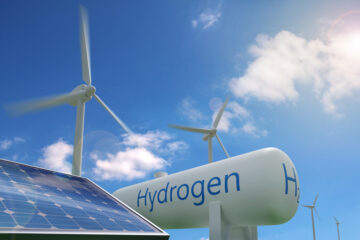
How hydrogen safety is monitored with our devices
Detector Ltd. offers several alternatives for monitoring hydrogen, including both fixed detectors for mounting in a room and portable gas detectors for personal safety.
Fixed gas detectors
Since hydrogen is lighter than air, it rises upward. For this reason, fixed gas detectors should be installed near the ceiling or other elevated areas where hydrogen may accumulate. If the ceiling has beams or other structures, detectors should be placed between them to ensure that gas accumulation is detected.
If a room is classified as a safe room, the following products are suitable for gas detection:
-

Gas detector VARIO (cat)
Gas detector for measuring and monitoring flammable gases.
-
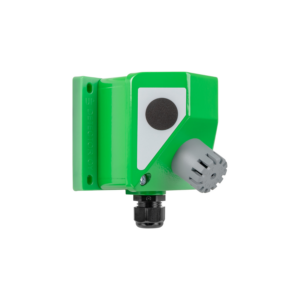
Gas detector VARIO (ec)
Gas detector for measuring and monitoring toxic gases, oxygen, nitrogen, methanol, hydrogen, and carbon monoxide.
If a room is classified as an explosion hazard area (ATEX), the following products are suitable for hydrogen monitoring.
-

Gas Detector KEX
Gas detector for measuring and monitoring flammable gases and solvent vapors in explosive atmospheres.
-
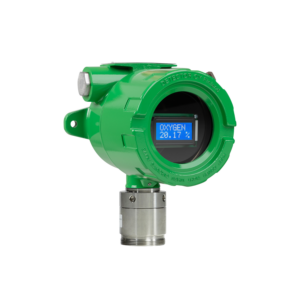
Gas Detector DGTeex
The DGTeex is suitable for use in hazardous areas for the measurement and monitoring of toxic gases, oxygen, nitrogen and hydrogen.
-

Gas detector DGTk2-ex
The DGTk2-ex is suitable for use in hazardous area for the measurement and monitoring of combustible gases.
-
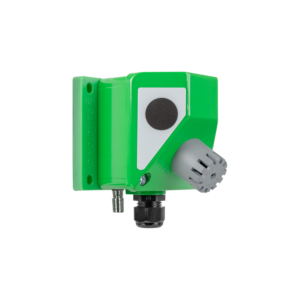
Gas detector DGTec2-ex
The DGTec2-ex is suitable for use in hazardous area for the measurement and monitoring of toxic gases, oxygen, nitrogen, methanols and hydrogen.
Portable gas monitors
The following Detector Ltd. portable gas monitors are suitable for hydrogen monitoring:
-
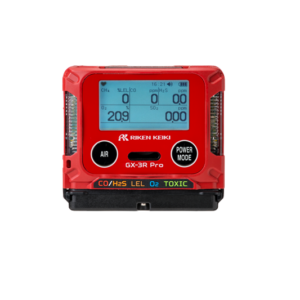
Riken Keiki GX-3R Pro
The Riken Keiki GX-3R Pro is a small, lightweight 4 gas monitor that can be used to measure five different gases.
-

Riken Keiki GX-3R
The Riken Keiki GX-3R is the smallest and lightest 4 Gas Confined Space monitor available on the market.
Gas detection controller

Fixed gas detectors should be connected to either a gas monitoring controller or an existing building automation system to ensure effective alarm handling. If no separate automation system is in place, Detector offers Seguro gas monitoring controller, which is specifically designed for this purpose.
Read more: Seguro gas detection controller | Detector Oy
Hydrogen – background and history

Hydrogen has been known as an energy source for over 200 years and is considered one of the cornerstones of the future energy system. It allows industries to reduce their dependence on fossil fuels and transition to emission-free energy production.
Several decades ago, hydrogen was already being considered as a fuel for ships and other transport vehicles, but its explosiveness and the risks associated with static electricity posed challenges to technological development. Today, hydrogen safety has significantly improved due to advances in materials and technology.
Green hydrogen
The environmental impact of hydrogen depends on how it is produced. Not all hydrogen energy is carbon-neutral, and it is classified into different categories based on the production method:
- Brown/black hydrogen: produced from coal through gasification, thus releasing carbon dioxide
- Grey hydrogen: produced from natural gas, or methane, using steam methane reformation A relatively large volume of carbon dioxide is also released in the production of grey hydrogen.
- Blue hydrogen: Also produced from the steam reformation of natural gas, but carbon dioxide emissions are trapped by means of carbon capture and storage (CCS)
- Green hydrogen: Green hydrogen is made by using clean electricity from renewable energy sources to electrolyse water. Green hydrogen can also be produced from biogas.
Facts on hydrogen and its monitoring:
https://youtu.be/BDc4IN8GMZo (in Finnish)