
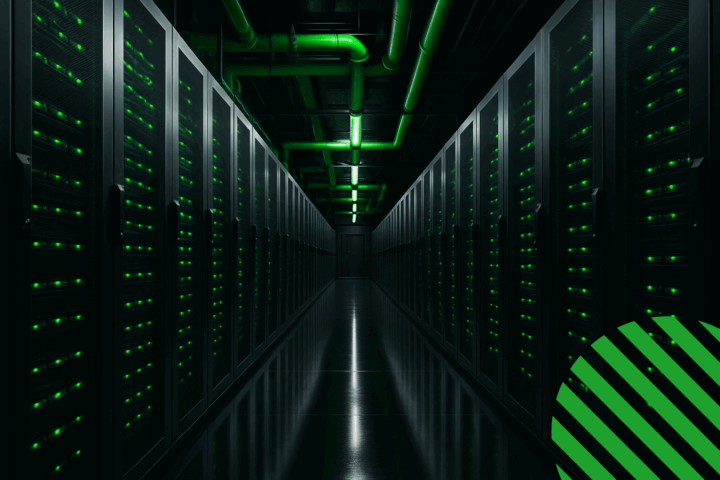
Data centers are a critical and rapidly growing part of the societal infrastructure. Their operational reliability is paramount, and every design decision directly impacts both safety and usability. Gas monitoring cannot be overlooked, as many processes generate or utilize gases that may pose health or explosion risks.
The demand for data centers is increasing rapidly due to the growth in data usage and the construction of new server rooms. Finland is an ideal location for data centers: the cold climate supports cooling needs, and a reliable infrastructure enables large-scale implementations. However, both physical and logical safety must be considered in the design phase. Due to the immense energy consumption in data centers, energy efficiency and safety play a key role in overall system management.
Backup Power and Batteries
To ensure power supply, data centers utilize diesel generators and large battery storage solutions. Both present gas-related risks:
- Diesel engines produce carbon monoxide (CO), which is colorless, odorless, and lethal even in low concentrations.
- Hydrocarbon vapors (HC) may be present near fuel storage, increasing ignition risks.
- Battery systems, such as lithium-ion and lead-acid batteries, can release hydrogen (H₂) under fault conditions, forming explosive mixtures.
Due to these risks, gas monitoring is essential in generator and battery storage areas. Detectors must be placed properly: CO at breathing level, H₂ near the ceiling.
Cooling Systems
Cooling is one of the most important systems in a data center. The refrigerants used determine the need for gas monitoring:
- Ammonia (NH₃) is efficient but toxic and explosive, requiring rapid detection.
- Carbon dioxide (CO₂) can displace oxygen and create an asphyxiation risk.
- F-gases / freons (e.g., R1234ze) are harmful to the environment and must be monitored.
- Propane (R290) is flammable and explosive, requiring special handling.
Each refrigerant type demands specific sensors and must be selected based on the cooling system in use.
Other Possible Gases
Gases such as chlorine (Cl₂), ozone (O₃), and hydrogen sulfide (H₂S) may also be present in certain data center processes or water treatment systems. Though less common, they can pose serious risks in specific situations and must be considered in safety planning.
Why Is Planning Critical?
Gas monitoring is not just an optional addition to the safety system—it is an essential part of data center availability and safety. Any deviation in gas concentration may pose serious health hazards, increase fire or explosion risk, and lead to operational downtime.
When gas monitoring is integrated already during the planning phase, you ensure that:
- Detectors are correctly selected for the fuels, batteries, and refrigerants in use.
- Detectors are installed at proper heights and locations according to gas properties.
- The system can be integrated into the overall building and safety automation system.